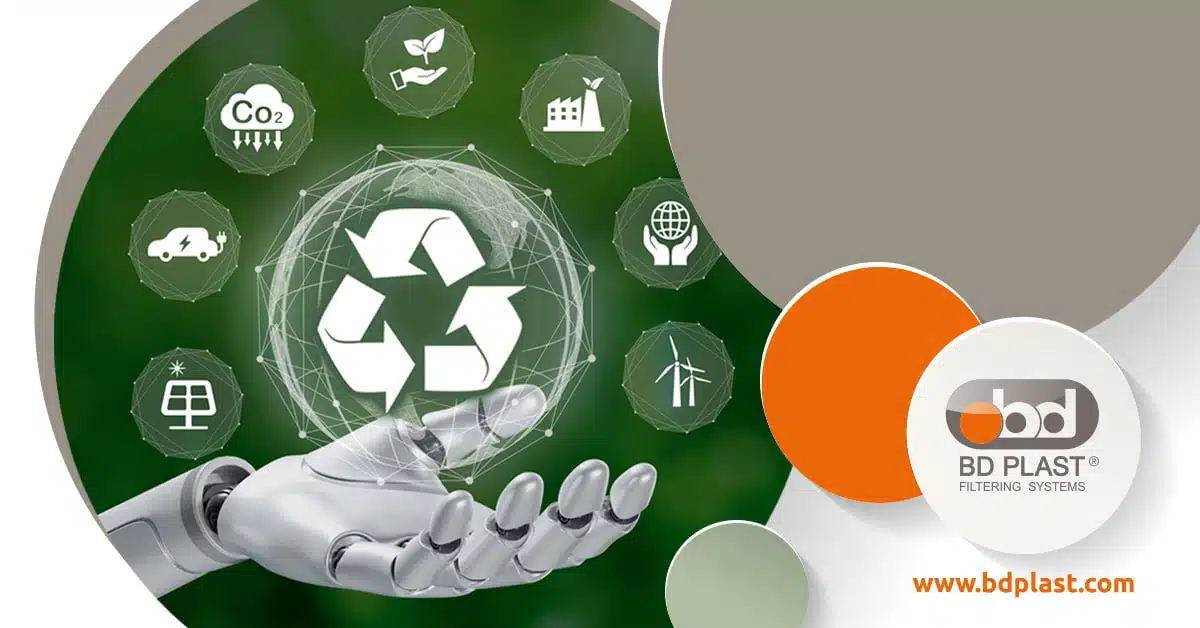
AI at the service of the circular economy
Artificial intelligence is playing a crucial role in the recycling industry, facilitating the path toward a circular economy through various functionalities.
First of all, automated waste classification has become an important resource. AI algorithms can identify and categorize waste efficiently, greatly simplifying the recycling process. This enables faster and more accurate management of recyclable materials.
In addition, AI is optimizing recycling processes themselves. Through data analysis, AI can optimize transport and treatment processes, maximizing material recovery and minimizing waste. This leads to greater overall efficiency in the recycling system.
Another crucial aspect is the monitoring and predictive maintenance of plants. Using data from sensors, AI is able to predict failures and maintenance issues in advance, enabling timely interventions to improve plant efficiency. This helps avoid costly downtime and optimizes recycling operations.
Finally, AI supports the traceability and management of materials throughout the entire recycling chain. Thanks to data analysis, it is possible to track materials more accurately and efficiently, ensuring greater control over material flows and helping to guarantee regulatory and environmental compliance.
Along these lines, the world’s largest manufacturer of recycling plants has recently entered into a strategic partnership with a leading company in AI-based waste analysis, to improve the efficiency of waste sorting and recovery centers in response to the growing waste crisis.
The agreement will enable the development of fully automated and intelligent recycling plants, reducing the amount of waste sent to landfills and incinerators.
Specifically, AI will be used to analyze the composition of waste in real time, helping the industry recover more value from waste and reduce its environmental impact.
This collaboration aims to modernize thousands of existing plants through artificial intelligence in order to increase recycling rates and measure greenhouse gas emissions from waste.
In summary, artificial intelligence is revolutionizing the recycling industry, providing innovative solutions that improve efficiency, reduce waste, and promote a more sustainable circular economy.